

Anthroposophy in Hawkes Bay
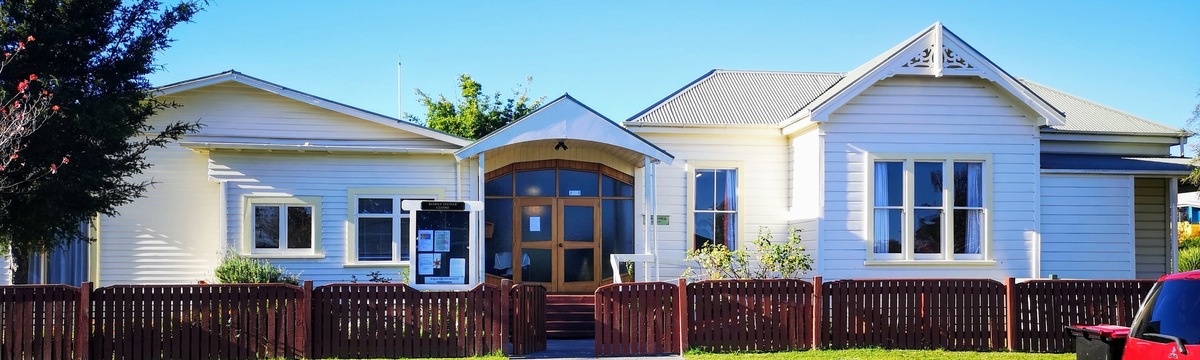
Rudolf Steiner Centre, 401 Whitehead Road, Hastings
Events in brief
over next 2 weeks
22 March to 5 April 2026
- Friday 27 March. 7 pm. Friday Conversation Group. Karmic Relationships Vol viii, Lect 5, p56.
- Saturday 4 April. 9:30 am. School of Spiritual Science Lesson 3. Please be early.
- ~~~~~~~~~~~~~~~~~~~~~~~~~~~~~~~~~~~~~~~~~~~~
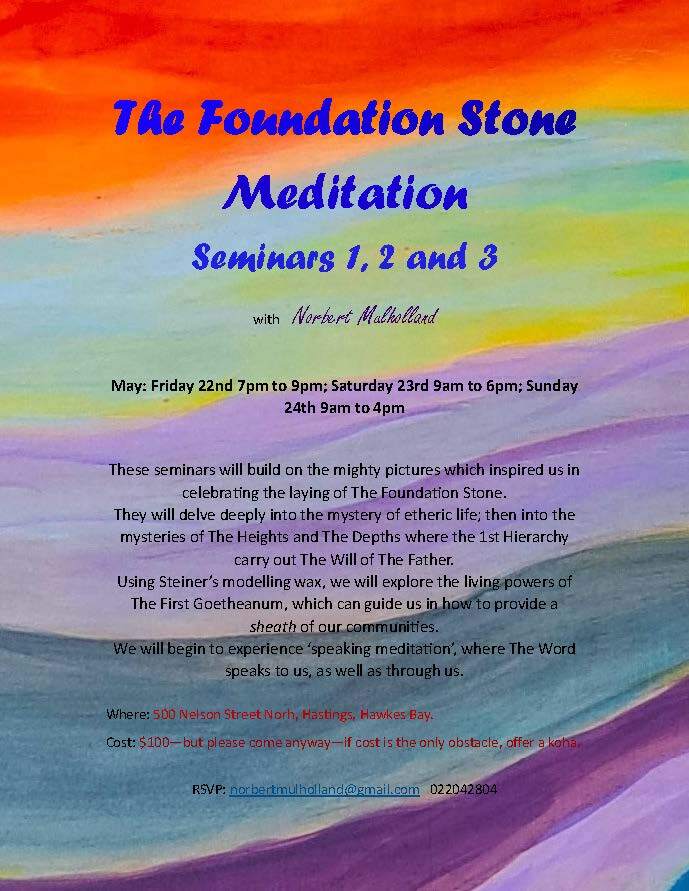
- Friday 22 to Sunday 24 May. Meditation Seminars 1, 2, 3 with Norbert Mulholland
- Saturday 13 June. ASNZ AGM and Society Day in Hawke's Bay
- Saturday 25 July. Anthroposophy Hawke's Bay AGM.
CHRISTIAN COMMUNITY
Hartmut Borries is visiting from Auckland and will give a talk at Rangimarie on Tuesday, 24th March entitled:
“The Passion of the Word and When Love Reaches our Will”
Join us for a warm drink from 7pm; talk begins at 7.30pm.
Many thanks,
Lesley
~~~~~~~~~~~~~~~~~~~~~~~~
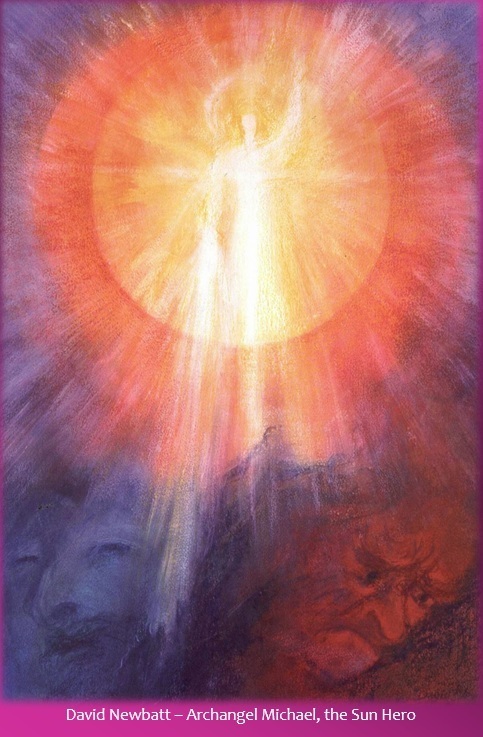
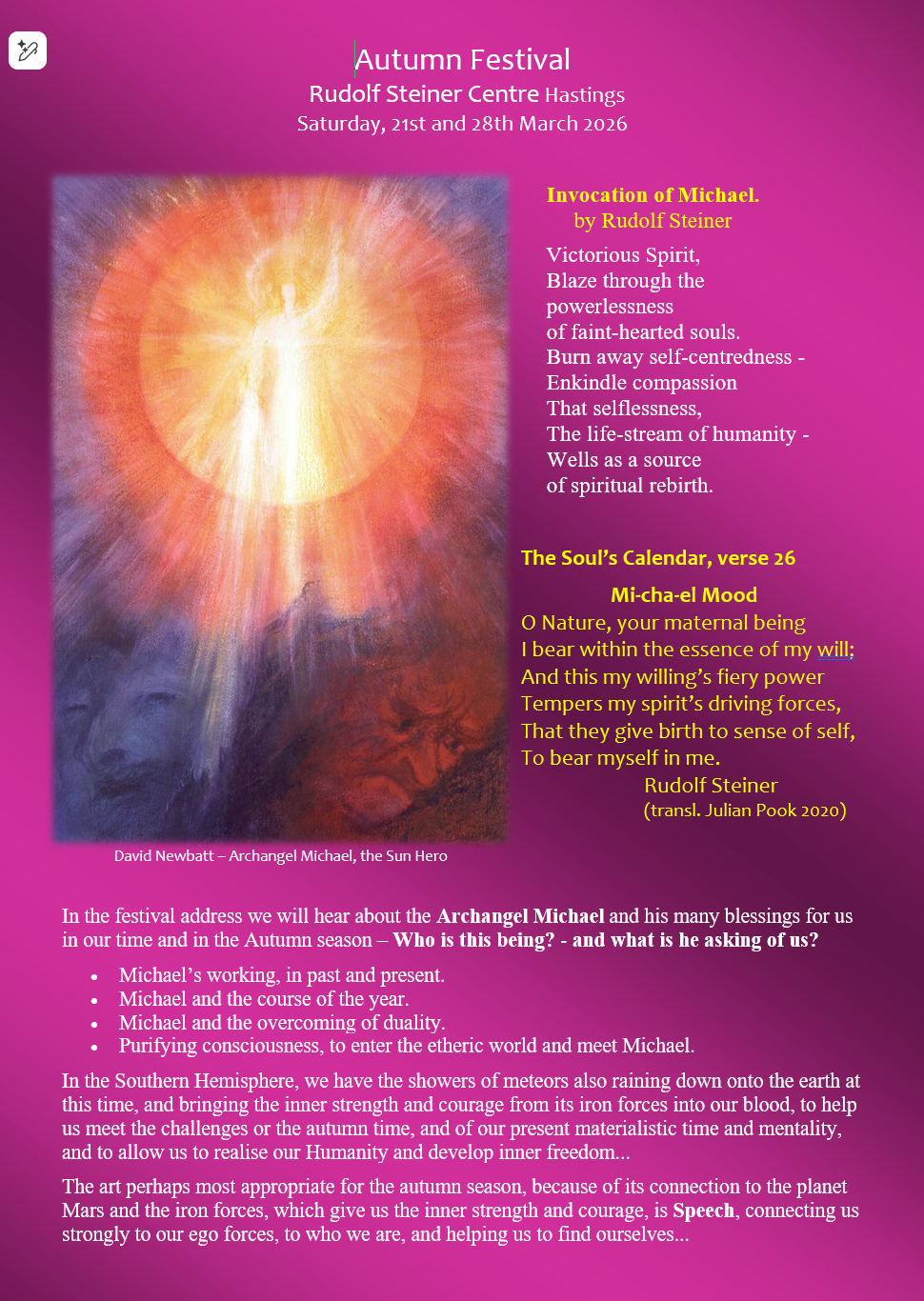
Autumn Festival
with John Jackson
7:00 pm. Refreshments in the Foyer.
Please bring a festive plate to share; juicy drinks are also welcome.
7:30 pm. – Gathering in the Festival room –
******
Some notes on the programme
What is this festival about..?
There will be a festival address by John Allison, on the Archangel Michael and his many blessings for us in our time and in the Autumn season – Who is this being? - and what is he asking of us?
- Michael’s working, in past and present.
- Michael and the course of the year.
- Michael and the overcoming of duality.
- Purifying consciousness, to enter the etheric world and meet Michael.
In the Southern Hemisphere, we have the showers of meteors also raining down onto the earth at this time, and bringing the inner strength and courage from its iron forces into our blood, to help us meet the challenges or the autumn time, and of our present materialistic time and mentality, and to allow us to realise our Humanity and develop inner freedom...
The art perhaps most appropriate for the autumn season, because of its connection to the planet Mars and the iron forces, which give us the inner strength and courage, is Speech, connecting strongly to our ego forces, to who we are, and helping us to find ourselves...
Here is a verse by Rudolf Steiner which we will be speaking together:
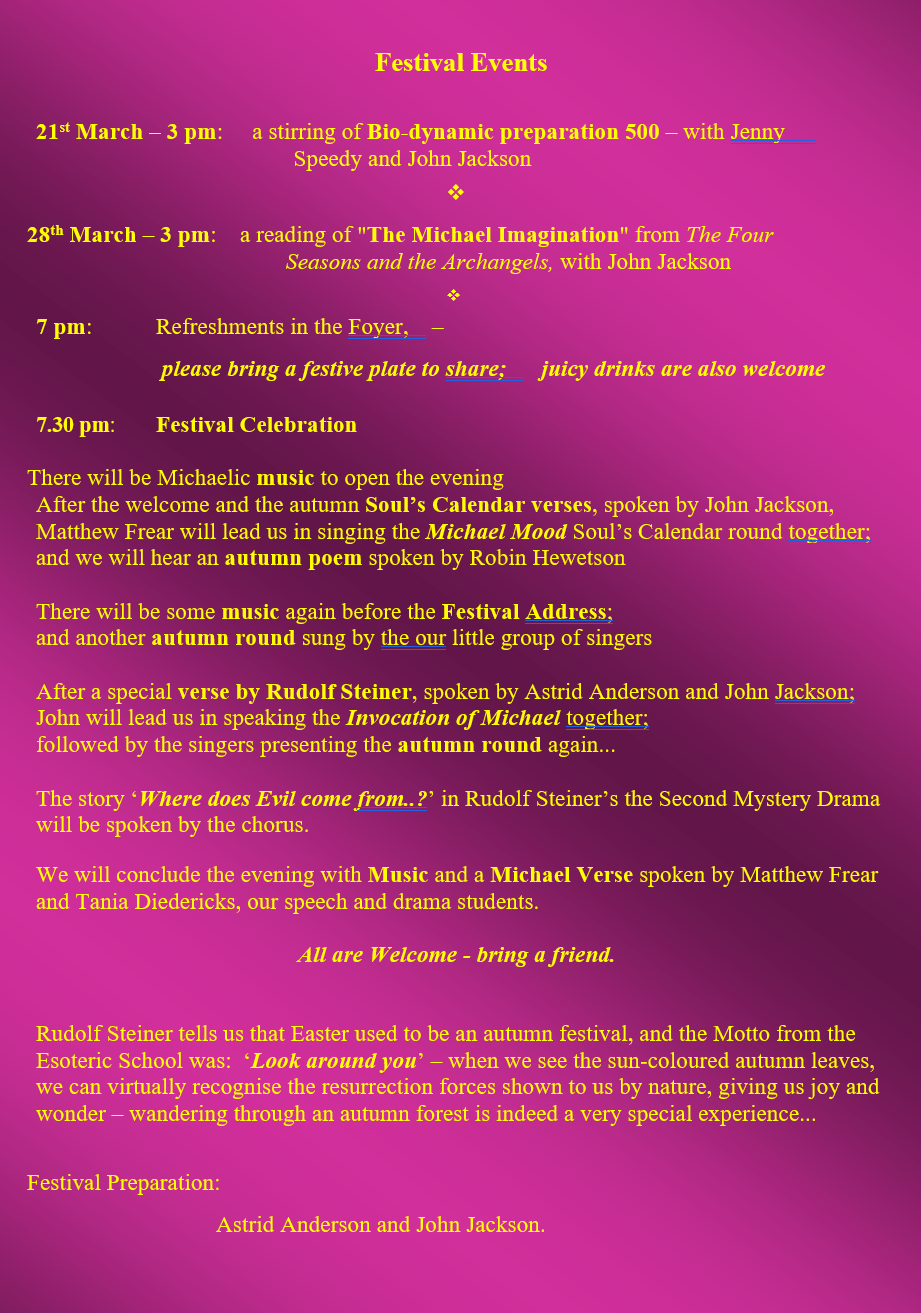
Invocation of Michael.
Victorious Spirit,
Blaze through the powerlessness
of faint-hearted souls.
Burn away self-centredness -
Enkindle compassion
That selflessness,
The life-stream of humanity -
Wells as a source
of spiritual rebirth.
Programme:
*There will be Michaelic music to open the evening...
*After the welcome and the autumn Soul Calendar verses, spoken by John Jackson,
*Matthew Frear will lead us singing the Michael Mood round by Julian Pook;
*An autumn poem spoken by Robyn Hewetson;
*Music;
*Festival Address by John Allison;
*An autumn round "When Autumn Mists Gather";
*Verse by Rudolf Steiner, spoken by Astrid Anderson and John Jackson;
*We all speak the Invocation of Michael led by John Jackson;
*Autumn round again;
*The story "Where does Evil come from?" spoken by a chorus;
*The evening concludes with music and a Michael verse spoken
by speech and drama students Matthew Frear and Tania Diedericks
Rudolf Steiner tells us that Easter used to be an autumn festival, and the Motto from the Esoteric School was: ‘Look around you’ – when we see the sun-coloured autumn leaves, we can virtually recognise the resurrection forces shown to us by nature, giving us joy and wonder – wandering through an autumn forest is indeed a very special experience...
All are Welcome - please bring a friend.
Astrid Anderson and John Jackson.
~~~~~~~~~~~~~~~~~~~~~~~~~
Seminar with Norbert Mulholland , save the date!
Here is the long awaited information on the 3 seminars in May with Norbert.
Please register directly with Norbert (see poster for contact details), including the people who have verbally indicated interest to me at Norbert’s last talk.
Gerrit
For the ASHB Committee
RSVP: norbertmulholland@gmail.com 022 042804
Rationale For The Foundation Stone Meditation Seminars
To address ‘the deep longing for redemption in Human Souls’*
To build sheaths for communities dedicated to preparing a new Humanity.
‘So that through human will the earth can reach the goal set her from the very beginning.‘**
Taking up The Foundation Stone Meditation arms us against every adversary. The granting of this meditation to Humanity is quite possibly the single most important deed of Rudolf Steiner's life. Our work with it will never cease.
Seminar 01: The Macrocosmic Lords Prayer; Christian Rosenkreutz; The House of The Word
Seminar 02: The living Goetheanum, the living ‘sheath’
Seminar 03: The First Tablet—The Father God
Seminar 04: The Second Tablet—The Son God
Seminar 05: The Third Tablet—The Spirit God
Seminar 06: Life Spirit/’Buddi’: The Elemental Spirits—Humanity
Seminar 07: The New Earth—New Sun
The intuition for this initiative arose in the early days of Covid19, before Klaus Schwab (founder and then Executive Chair of The World Economic Forum) announced a ‘great reset’—calling this reset ‘a turning point’ in human history, the target year for implementation was 2030.
The final Foundation Stone seminar would also fall in 2030.
Bearing in mind that Steiner stated, specifically at the laying of the foundation stone, that the real turning point of time is 33, and counting 3x666 (1998 the time of Sorat, ‘the sun demon’), we arrive at 2031, when we can expect a mighty adversarial impulse, advancing an exclusively material, technological reality.
Should we be able to complete the above seminars, it would be possible to enact a significant deed in 2031 centred on The Foundation Stone Meditation, which would counter ‘The Beast’*** and advance the true mission of the earth—freedom and love.
* and ** laying of the foundation stone of The First Goetheanum, September 1913
***The Apocalypse of St. John: Revelation 13:18
~~~~~~~~~~~~~~~~~~~~
An Art Storage Unit
At the Centre there are many framed art prints which are used throughout the year for festivals and displays and people often comment that they enjoy seeing the different art works on show. The local Committee has approved our request to purchase an art storage unit which will hold some, not all, of the framed prints and will make them safely accessible, which is not the case at present. To accommodate this unit in the storage room we are doing a bit of reorganization which will also make the easels and blackboards, which are often used, more accessible. It will clear a space by the window for the art storage unit which will be on wheels, so easy to move should there be a need.The display stands and screens are now behind the curtains by the basins in the toilet area and the coat hooks will be repositioned shortly. The woolen, black Rembrandt man's jacket which has been hanging there for months, maybe years, will go to the Op shop if not removed from the storage room (by the entrance to the main room), by the end of March.At present we are investigating suitable art storage units. If you have any ideas, please contact us -Diana - diana@bacchus.co.nz or Bernie - sophia@actrix.co.nz
~~~~~~~~~~~~~~~~~~~~~~
Woven Wall Hanging
It was great to receive a response to last week’s request about the origin of the woven wall hanging of Michael and the dragon. Several people associated it with Brian Butler and Paulette Durrant gave further details. Paulette recalls that it belonged to Margaret Piper (Joy) who was an art therapist in Australia. She came to NZ to look after Olive Butler after she and Brian were involved in a car accident. The weaver, Anna Skaza-Galkowska was known to Joy who had purchased the wall hanging to loan to the Melbourne Anthroposophical Centre. But when Joy decided to live in Hawkes Bay she brought the weaving with her. Unfortunately, it had been hanging in a place that got too much light so it became very faded. (Because of this, it is the reverse side that is displayed in the foyer). Joy’s plan was to recolour it as she had the dyes with her, but felt it was beyond her and it did not eventuate, but she donated it to the Hastings Centre.
It is great to know the history of this large weaving and this information will be stored with it for future reference.
Bernie
~~~~~~~~~~~~~~~~~~~~~~
Threefold Anthroposophist
Anthroposophy has its roots in perceptions of the spiritual worlds. The branches, leaves, blossoms and fruits of Anthroposophy grow in all fields of human life and action. Our love-filled actions can plant seeds in the hearts of those whom we meet.
We, as human beings we are threefold in many ways:
Physically: Head – Chest/heart – Limbs/hands.
Etheric processes: Nervous system – Circulation system – Metabolic system.
Astral Soul forces: Thinking – Feeling – Willing.
Past life/previous incarnations – Present incarnation – Future incarnations.
We stand on the earth with the dark, solid mineral world beneath our feet –
around us on all sides, occupying a thin layer (from the bottom of the oceans to the mountain tops) is living nature including humanity –
above our heads is the enormous light-filled realm of sun and stars, the heavens.
The human society, in which we live our lives, reflects this threefoldness in the Cultural, Social and Economic realms.
A key characteristic of the Cultural realm is that it is the realm where we develop our individual talents and creativity. Freedom/independence are important principles here.
A key characteristic of the Social realm is that it is the realm where we meet and interact with our fellow human beings. Equality/fairness are important principles here.
A key characteristic of the Economic realm is that it is the realm where we use our talents to produce commodities that meet the needs of other people. Cooperation/altruism are important principles here.
We can see this threefoldness in our relationship to Anthroposophy:
Individually we read and study Anthroposophical lectures and texts and engage in private spiritual scientific research. (Rudolf Steiner called this, collectively, the Anthroposophical movement.)
We have meetings – we meet each other!
Rudolf Steiner: “Everyone who goes to an anthroposophical meeting should have the feeling that he will find more there than when s/he merely studies Anthroposophy alone. We should be able to go to meetings because we shall find human beings there, with whom we like to work at Anthroposophy together. In the literature on Anthroposophy, a certain view of life and the world is to be found. The anthroposophical meetings are there for man to find his fellow-man.
However keenly we read anthroposophical literature, we should be able to feel joy and elation as we go to a gathering of Anthroposophists – simply because we look forward to the human beings we shall find there. Then we shall look forward to the meeting, even if we expect to hear no more than we have studied long a ago and made our own.”
The third aspect is that Anthroposophy needs a home where meetings can take place. The organisation formed in Dornach to build the Goetheanum was called the Johannes-Bau-Verein. This, of course, undertook the huge task of fundraising.
Here we have a much more modest situation. For just on fifty years (from the late 1970s) Anthroposophy Hawke’s Bay has had a Centre on the corner of Nelson and Whithead, purchased when a member, Dora Bird, bequeathed her home to the Society enabling it to purchase the corner dairy over the road from the Steiner School. In the five decades since countless people have laboured with love to make what is today. (Removed the dairy extension; removed the walls from 4 rooms and insert a roof beam to create the large Main Room. When Taikura expanded its playground to Fitzroy Avenue, the house at 310 was moved behind the Centre and a Foyer built to join them and provide an easier entrance.)
A major task of the Committee is to maintain this heritage for future generations. I was surprised when I was preparing the Budget for the coming year when I expressed the annual cost as a daily cost:
|
Item |
Annual |
Daily |
|
Insurance |
$ 4,300 |
$12 |
|
HDC, HBRC Rates |
$ 5,120 |
$14 |
|
Electric Power |
$ 2,500 |
$ 7 |
|
Cleaning and supplies |
$ 1,800 |
$ 5 |
|
Gardening, green bin |
$ 1,675 |
$ 5 |
|
Lawn-mowing, edges |
$ 1,560 |
$ 5 |
|
Maintenance (plumber, electrician, etc) |
$ 3,000 |
$ 8 |
|
TOTAL |
$19,955 |
$56 |
Every day it costs us $59 just for the building, before we consider speakers and events, website and newsletters, etc. The effect of war on oil prices is an unknown, adverse factor.
So if you get a letter asking you to share or make a financial contribution, please consider it favourably.
Robin Bacchus
Treasurer
Posted: 20 Mar 2026