
Anthroposophy in Hawkes Bay
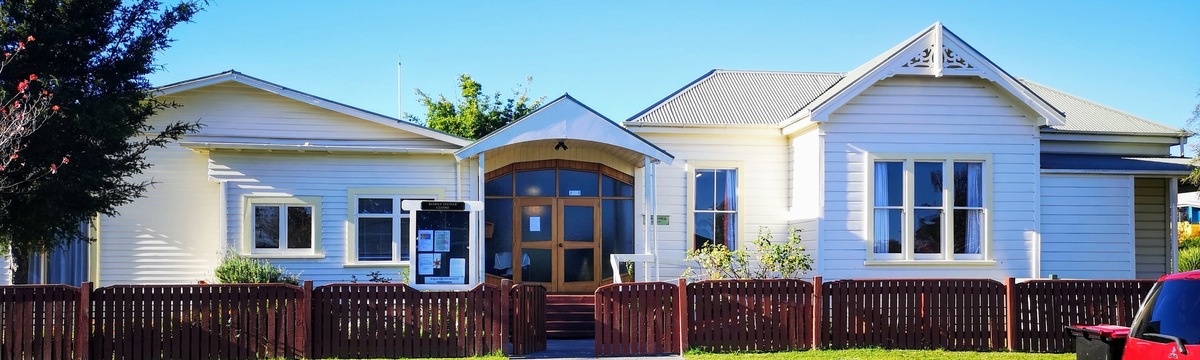
Rudolf Steiner Centre, 401 Whitehead Road, Hastings
Events in brief
over next 2 weeks: 17 to 31 May 2026
- Friday 22 to Sunday 24 May. Foundation Stone Meditation Seminars (details on poster) with Norbert Mulholland. Option: to attend only the Friday and Saturday evening lectures for $50 (both)
Participants: Please bring your own food. Coffee and tea-making facilities will be available. - Friday 29 May. Friday Conversation Group. Focus: "Karmic Relationships" Vol viii, Lect 6
- Sunday 31 May. Evening to Commemorate the Dead.
~~~~~~~~~~~~~~~~~~~~~~~~~~~~~~~~~~~~~~~~~~~~
Later in the year:
- Friday 12 June. Talk by Dr. Richard Drexel on "Sleep" at Taruna College.
- Saturday 13 June. ASNZ AGM and Society Day in Hawke's Bay. Please Register.
- Sunday 28 June, Midwinter Festival.
- Saturday 25 July. Anthroposophy Hawke's Bay AGM.
~~~~~~~~~~~~~~~~~~~~~~~~~
Report from AHB Committee meeting 14. May 2026
- The Budget for 2026/27 has been set. We are running at a deficit and urge members to respond favourably when our appeal for the financial contribution is sent out following our AGM on 25. July 2026.
- The suggested list of new books for the Library from members has been collated. Robin to meet with Fran and then order initially what is available from Humanity Books, plus others if finances allow.
- Our insurance has now been finalised after obtaining the required reports re the rebuild valuation ($1.8 Million) and the state of the electrical wiring. As in previous years, our cover does not include natural disaster events due to the cost of the earthquake strengthening work that would be required to meet 34% of NBS code. [A building (or part of one) is considered legally earthquake-prone if it achieves less than 34% of the New Building Standard (NBS)]
- Coming Events:
a. 16 May: Matthew Frear’s presentation.
b. 22-24 May: Foundation Stone Meditation Seminar with Norbert Mulholland.
c. 31 May: Evening to commemorate the Dead. - First Aid Kit to be purchased.
- Members’ correspondence re. Tax deductibility of financial contribution being ok for AHB but not for ASNZ. This will be raised at the ASNZ AGM.
- Angela will organise a ”safe place” event at the Centre where people can share their experiences from the time of the Covid Pandemic, e.g. “vaccine” injuries and deaths, loss of employment, home and relationships due to mandating, excess mortality following the introduction of the COVID “vaccine”, increase of sudden and unexpected deaths, so-called turbo-cancers and still births, etc., etc.
Gerrit Raichle
For the AHB Committee (John Jackson, Angela Hair, Robin Bacchus)
~~~~~~~~~~~~~~~~~~~~~~~~~
Art in the Foyer
The current display of art in the Foyer is by Te Whiti Seeds and Tracey McLean, both of whom have connections to Ngati Kahungunu.
Three QUOTES from C. S. Lewis:
"Hardships often prepare ordinary people for an extraordinary destiny."
"Integrity is doing the right thing even when no one is watching."
"True humility is not thinking less of yourself; it is of yourself less."
Posted: 14 May 2026