


Anthroposophy in Hawkes Bay
Rudolf Steiner Centre, 401 Whitehead Road, Hastings
Events in brief for your diary
Friday 19 June to Sunday 5 July 2026
- Friday 19 June, 7 pm to 8:30 pm. Friday Conversation Group meets in the Library. Please note that, due to a clash, this is a week later than our usual rhythm of 2nd and 4th Friday of the month.
- Sunday 21 June. << Shortest DAY of the year. >>
3:00 pm. Book Launch of Mary Willow's "Breaking Through - How to Rescue Childhood and Heal the Parent-Child Relationship" at Taikura's whare 'Te Manukura'. - Friday 26 June, 7 to 8:30 pm. Friday Conversation Group meets in the Library. Study text will be Christianity as Mystical Fact* 3rd edition
- Sunday 28 June, 7 pm. Midwinter Festival. Details to be announced.
- Monday 29 June, from 12:30 to 2:45 pm. Talking, Listening, Caring. Invitation.
- Saturday 4 July from 9:30 am. School of Spiritual Science. Lesson 6.
- Saturday 4 July from 3 to 4 pm. A consultation meeting about creating a replacement for the Branch's 2008 Constitution as requested by the Charities Commission.
~~~~~~~~~~~~~~~~~~~~~~~~~~~~~~~~~~~~~~~~~~~~
Later in the year:
- MONDAYS 6, 13, 20, 27 July 7 pm. Conversations on the Christmas 1923 FOUNDATION STONE**
- Saturday 25 July. Anthroposophy Hawke's Bay AGM. Approving a new Constitution.
- First Saturday of every month, from 9:30 am. School of Spiritual Science.
~~~~~~~~~~~~~~~~~~~~~~~~
This newsletter is now sent out on Friday mornings to include weekend notices, so please have your articles to me by Wednesday evenings. (robin@bacchus.co.nz).
Apart from local members and friends in Hawkes Bay, modern technology enables it to reach much wider readership in Christchurch, Wellington, Auckland, Northland, and a number overseas. Positive feedback is often received and is very appreciated. Robin
~~~~~~~~~~~~~~~~~~~~~~~~~
Christianity as Mystical Fact (1902) by Austrian esotericist Rudolf Steiner is a foundational work of Anthroposophy. It bridges the gap between pre-Christian pagan mysteries and the historical Gospels, framing the Christ event as the pivotal turning point in human spiritual evolution.
~~~~~~~~~~~~~~~~~~~~~~~~~
Our Society’s Constitution.
Forming a society provides a community group, that plans to operate long-term, with a formal legal structure.
The main reasons to form a society include:
- Legal Protection: It creates a distinct legal identity. This means individual members and committee officers are generally not personally liable for the society's debts, contracts, or financial obligations.
- Asset Security: Any property ( the Anthroposophical Centre), funds, library or equipment belong to the society as a whole, not to any single individual.
- Independent Existence (Continuity): The organization continues to operate smoothly even if members, volunteers, or committee leaders change over time.
- Financial and Operational Freedom: As a standalone entity, the society can easily open its own bank account, hold leases, hire staff, apply for funding grants, and enter into contracts.
- Credibility: It builds trust with funding agencies, donors, and the broader community by demonstrating structured, transparent governance.
For us here in Hawke's Bay, the Anthroposophical Society is threefold:
Global: General Anthroposophical Society (GAS) [Allgemeine Anthroposophische Gesellschaft] is based at the Goetheanum, Dornach, Switzerland and is run by a Vorstand.
Country or national: Anthroposophical Society of New Zealand (ASNZ) run by a Council with a Representative who regularly visits centres around NZ and also attends meetings at the Goetheanum on our behalf.
Local: Anthroposophy Hawke's Bay (AHB) owns the Centre at 401 Whitehead Road and is run by a Committee responsible for maintaining its assets to a good standard for use by members.
There are two legal forms for Societies in New Zealand: Incorporated and Charitable. Our society was originally formed as a Charitable Trust, which it still is. We report annually to the recently reformed Charities Commission, which has an overseeing role that is carried out by Charities Services (Ngā Ratonga Kaupapa Atawhai), a business unit within the Department of Internal Affairs. Its primary function is to regulate the charitable sector and promote public trust and confidence through transparency and accountability.
The Commission has asked all charitable organisations to review their Rules or Constitution to ensure that they are fit for purpose. The ASNZ totally rewrote its Constitution, which was adopted, after regional consultation meetings, on 13 June.
It is now time for us to improve the local constitution, which was written in 2008. Our AGM is scheduled for Saturday 25 July, about 5 weeks away. Revising the Constitution is on the Agenda.
As this process is complex, the Committee wish to have a Consultation Meeting on Saturday 4 July from 3 pm to 4:30 pm at the Centre.
Some of the issues are:
- How membership is determined and managed;
- How financial support is handled;
- The roles and responsibilities of Trustees and Committee members.
The aim is to reform the current Constitution into a form that can be simply adopted as a whole (as was done by the ASNZ) at our AGM. You can read Proposals for change so far along with a commentary on them.
We call on all those who have an interest in these matters to join us on Saturday 4 July at 3pm.
~~~~~~~~~~~~~~~~~~~~~~
Warm and cold – finding the balance . . .
When a group of people come together, as we regularly do, it is important to find a balance in relation to the physical atmosphere in the space. We now have more than adequate heating and, along with the underfloor insulation, it is indeed a comfortable space, that is until it is not.
Understandably, with a group of people there will be those who experience the cold more than others, those who don’t feel the cold and those who are comfortable with either.
The problem with being too hot /cold is that we become preoccupied with this and find it difficult to remain alert.
Heating the room before an event and then turning this down or off has proven to be a good middle road in balancing the temperature. An additional bonus is that in silencing the noise of the heaters, the quiet can support our conversations and listening.
For those who do feel the cold more acutely, knee blankets are available to bring comfort and extra warmth, these are available both in the foyer and in the main room.
Bernie Raichle.
~~~~~~~~~~~~~~~~~~~~~~~~
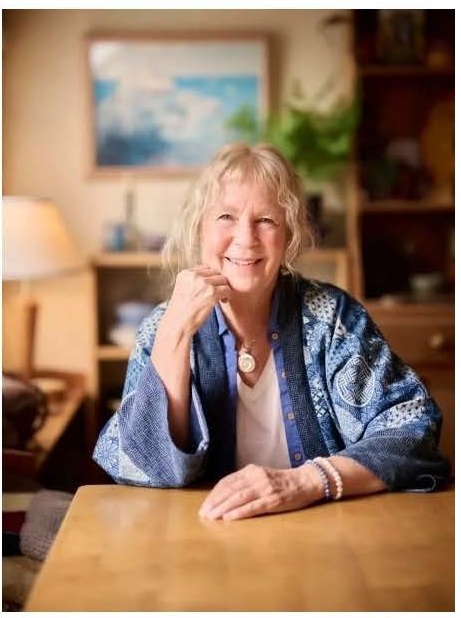
Mary Willow Book Launch at Taikura
What if there was not one child to parent but two?
Parenting mentor and past nurse, midwife, and Waldorf educator, Mary Willow, introduces the
dramatic difference between the True Child and the child’s Defence System which she calls ‘the
Guard Dog’, in her new book:
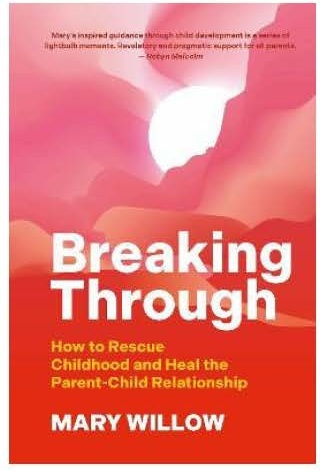
BREAKING THROUGH How to Rescue Childhood and Heal the Parent-Child Relationship.
This new and dynamic framework for understanding your child’s behaviour and transforming family
life covers early childhood through to the teenage years.
Her book is available at all main bookstores from 1 June 2026. The e-book version is
available on Kindle and other e-readers.
She will be visiting our school to give a community talk with Q&A , followed by book sales and
signins. This will place in our whare ‘Te Manukura’ at 3:00 pm on Sunday 21 June.
On the day before: Saturday 20 June at 3:30 pm Mary will speak about her book at Wardini's Bookshop in Havelock North.
~~~~~~~~~~~~~~~~~~~~~~~~~
Conversations on the Christmas Foundation of 1923
For the four MONDAYS 6th, 13th, 20th and 27th in July there will be a
conversation on the FOUNDATION STONE at the centre.
Conversations from 7 pm
The Foundation Stone as laid at the Christmas Conference 1923-24 is
such a fundamental event in the life of Anthroposophy that it is not easy to
comprehend all its ramifications. I would like to consider one aspect:
what it cost RUDOLF STEINER to take on his shoulders, the destiny of
the Anthroposophical Society.
Christopher Bacchus
~~~~~~~~~~~~~~~~~~~~~~~~~~~~~
Aging
Recently we have had talks on “The Science of Death” and “Sleep: the secret half of Life”. Last year had sessions on preparing for death.
Rudolf Steiner spoke of 9 seven-year phases of development taking us to the age of 63. Rudolf Steiner died at the age of 64, so we don’t have his reflections on the years after the age of 63. Until recently, many people would retire from their working life at age 65. Life expectancy has lengthened greatly over the last century, with many people living into their 80s and 90s.
A Swiss contemporary of Rudolf Steiner was Carl Jung, who died in 1961 at the age of 85, did reflect on old age, the sunset years.
The dawn and morning of life are a time of outward development and achievement. Noon may have a mid-life crisis and a change of direction. The afternoon of life is a maturing time of inner reflection and introspection. The descent into the sunset and dusk of life may be accompanied by a decline in physical faculties.
Jung has some interesting advice for people approaching or in this stage of life.
It has been called the Four Essential Pillars of Healthy Ageing.
These pillars are vital for integrating experiences and achieving a sense of coherence in life:
- Purpose: Cultivating a sense of purpose helps individuals navigate the challenges of ageing and fosters a more meaningful existence.
- Self-Integration: Embracing all aspects of oneself, both positive and negative, including past experiences and emotions, leads to greater inner harmony.
- Acceptance of Life’s Limits: Coming to terms with the inevitable limitations of ageing promotes peace and reduces anxiety about the future.
- Inner Coherence: Developing a coherent narrative of one’s life aids in understanding and integrating experiences, enhancing overall satisfaction.
There are many places where one can read much more in depth about these processes.
~~~~~~~~~~~~~~~~~~~~~~~~~~~~~~
Arithmetic Musings #12
Last week we looked at finding the first 7 Perfect numbers. Perfection is rare!
This week
Introducing Arithmetic’s Little Helpers imaginatively:
ADDITION: The activity of gathering and collecting things together is the process of addition for which we use the symbol + called plus. Result: Sum

SUBTRACTION: The activity of sharing or giving things to others is the process of subtraction for which we use the symbol – called minus. Result: Difference

MULTIPLICATION: The activity of gathering and stacking equal-sized blocks of things together for which we use the symbol x, called times. Result: Product.

DIVISION: The activity of sharing and distributing things into exact equal-sized groups for which we use the symbols / or ÷ or : called divide by. Result: Quotient or Quota

COMPARISON: Greater than’ 'Equal' ‘Less than’
The Hungry Alligator < = >
The Hungry Alligator always turns towards the bigger side:

Big > Small or Small < Big;
But when both sides are the same, he just smiles:
Same = Same
So 7>5; 7<9; but 7+7 = 9+5
More next week. RB
Posted: 18 Jun 2026