


Anthroposophy in Hawkes Bay
Rudolf Steiner Centre, 401 Whitehead Road, Hastings
Events in brief
over next 2 weeks: 19 April to 3 May 2026
- Wednesday 22 April. 7:30 am. David Ureli's Introduction to the First Class continues with L5.
- Friday 24 April. 7 pm. An Early English and Chaucer Evening** with Tania Diedericks
- Saturday 2 May. 9:30 am. School of Spiritual Science, Lesson 4.
~~~~~~~~~~~~~~~~~~~~~~~~~~~~~~~~~~~~~~~~~~~~
Later in the year:
- Friday 8 May. 7 pm. Friday Conversation Group. Focus: "Karmic Relationships" Vol viii, Lect 6, p74.
- Monday 11 to Friday 15 May. A Story Workshop
- Saturday 16 May 3:30 pm. Matthew Frear's Presentation**
- Friday 22 to Sunday 24 May. Meditation Seminars poster with Norbert Mulholland**
- Sunday 31 May. Evening to Commemorate the Dead.
- Friday 12 June. Talk by Dr. Richard Drexel on "Sleep" at Taruna College.
- Saturday 13 June. ASNZ AGM and Society Day in Hawke's Bay
- Sunday 28 June, Midwinter Festival.
- Saturday 25 July. Anthroposophy Hawke's Bay AGM.
~~~~~~~~~~~~~~~~~~~~~~~~~
Report on Zoom Meeting with Regional Representatives and Michelle
Tuesday 14 April 2026
Northland
Two new younger members in their 20s and 30s.
Visit by Michelle and family in Keri Keri.
Not many things happening up north such as meetings, groups, etc..
Auckland
They had van James’ talk on R. Steiner and humour.
Event around the double dodecahedron model with talk by Norbert which created a lot of interest, also with new people.
One and a half day seminar with Norbert on Foundation Stone Meditation.
Painting workshops, Eurythmy sessions and teaching sessions in Steiner House.
Hamilton
The Waikato Waldorf School has finally found a permanent principal (Shelley Fitness) after a challenging time regards leadership.
Sue Simpson visits for class lessons once a month.
The Waldorf School hosts the Eurythmy Training.
Clare and Warwick Hutchinson are busy with the Earth Steward Farm, including hosting a stirring of 500 via flowform and applying over the farm as well as putting down 500 and CPP.
Wellington
Branch meets once a month.
At Easter a group worked on a reflection on the Last Supper.
Norbert held his seminar on the Foundation Stone Meditation.
A biography workshop was held recently.
Class lessons take place once a month.
Several reading groups.
Ongoing maintenance is required on the old building.
Generally a lively group in the Branch.
Christchurch
Wednesday study group continues during term time at Te Ara Sophia and will begin a new study at the start of term - World History in the Light of Anthroposophy (thanks to Hastings Library for the loan of several copies!)
Class meetings are held monthly .
Several smaller groups meet for various studies too - including one working with Three Folding.
The workshop with Thomas Mayer and Agnes Hardorp was well attended. There are two meditation groups arising from this. One monthly at Te Ara Sophia and one fortnightly in North Canterbury.
Simone Hamblett carries a wonderful group eurythmy session at Te Ara Sophia once a week.
They are looking forward to hosting the council on the 16th May.
Also negotiating a time with Norbert Mulholland for the 3rd Foundation Stone workshop.
Financial pressures on individuals are showing in various ways including one regular Wednesday study member saying they have to stop coming until fuel prices are lower.
As their group members age there are challenges with health, mobility and access.
From Michelle Vette as General Secretary
GAS AGM will be held from Friday 17 April to Sunday 19. April.
Online meeting of country General Sectaries on 14. April.
Justus Wittich will finish as Treasurer.
GAS is working on developing new contemporary bylaws.
The complete publication of Steiner’s work is now complete.
ASNZ AGM and Society Day in HB on 13 June; Society Day theme is ‘social agreements’.
ASNZ is currently working on renewing their bylaws. These changes will be distributed to members on 2 May to contemplate in time for the AGM.
‘Council in-person meetings’ before AGM in HB and Christchurch, and possibly other places.
Gerald Häfner's online talk ‘Current Wars and the Possibility for Peace’ on Thursday, 16 April which will be available as a recording later.
Zoom Conversation with Constanca Kaliks and Peter Selg on ‘School of Spiritual Science, Section Work and Class Work’ on 24. April, 7pm.
Class Conference in Auckland last weekend in May. (30th & 31st)
Working on the possibility for Steiner Schools to have Health Professionals due to a lack of Doctors and Nurses. A one-year programme is starting in December to train Health Professionals. Michelle is working with Dr. Mike Sargent to seamlessly connect Health Professionals and school environments and to build a platform to assist this process.
Any interested people in the community -- please contact Michelle
| michelle@anthroposophy.org.nz |
Eight people responded to the Council's request for expression of interest to work on a group processing applications for grants and loans.
Michelle would like an area representative for Motueka to join this Zoom group.
Simone Hamblett’s online eurythmy course to start up again, see next Scope for details.
Michelle will connect with Bridget Henderson of the BD Association to talk about enlivening the relationship between ASNZ and the BD Association.
Next area representatives Zoom Meeting 9 June.
Gerrit Raichle
~~~~~~~~~~~~~~~~~~~~~
Autumn Chrysanthemums
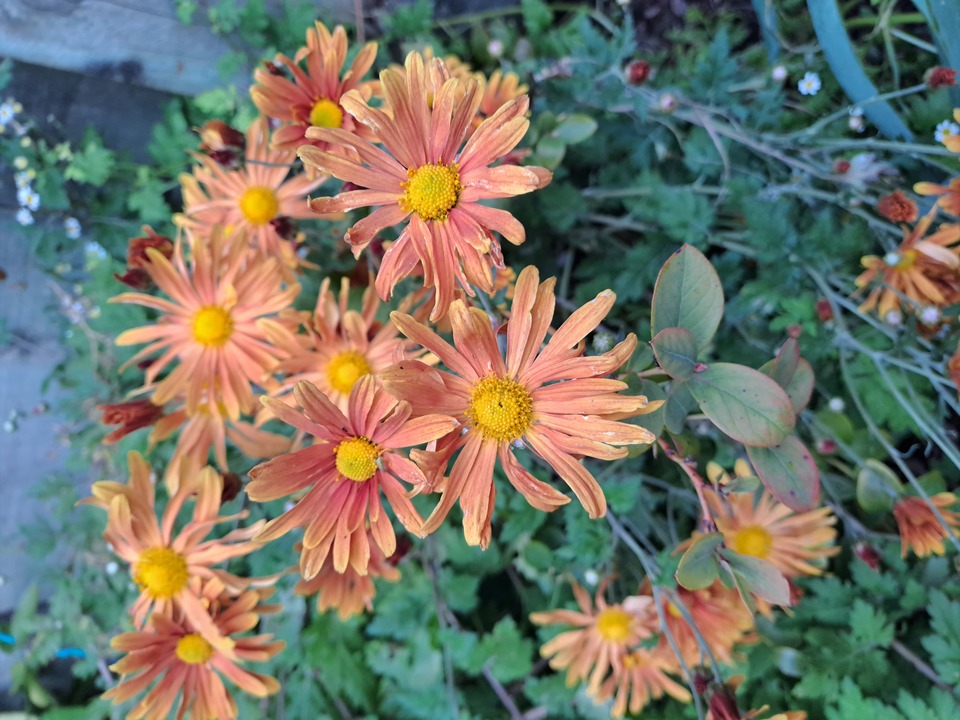
REFRESHED, renewed, replenished I am standing
Within this world of golden autumn light.
A wondrous, mighty sword the gods are handing
To those whose souls with fire of love burn bright.
Data on Volunteer hours
to robin@bacchus.co.nz
~~~~~~~~~~~~~~~~~~~~~~
Exploring Anthroposophy
Do you want to know more about the ideas of Rudolf Steiner that gave rise to Waldorf Steiner Education and the Threefold Social Order and a number of other social and practical impulses (medicine, health. agriculture, drama, eurythmy, etc.)?
As one of the founding teachers of the Taikura High School, a Class teacher and international teacher educator, I would like to offer people who are curious an opportunity to ask questions, discuss and have conversations about Anthroposophy and its relevance today.
Rudolf Steiner worked very intensively in the first quarter of the 20th century. Many things have outwardly changed since, and humanity has evolved, but in the process has created some challenging social and global situations. Rudolf Steiner has interesting insights into the stages of human development in an individual lifetime, but also socially. Are they still relevant today? I think so.
I would like to set up a series of regular weekly meetings during June, and possibly after, for those who are curious -- to bring their questions, listen, discuss, explore ….
Before setting days or times – over which I can be quite flexible – can I hear from anyone interested what days/times work best for them and similarly what does not.
Please contact me, Robin Bacchus, email robin@bacchus.co.nz or call or text 022-3982805.
~~~~~~~~~~~~~~~~~~~~~~~~~~
An Early English and Chaucer Evening
Tania Diedericks (school parent) is in her final year of a speech and drama training and will perform 3 early English ballads arising from oral tradition, as well as five characters (pilgrims) from "The Canterbury Tales" by Geoffrey Chaucer. There will also be early music and song, contributing to a rich evening, celebrating the beginnings of English literature.
This will be on Friday 24th April at 7pm.
Speech Presentation by Matthew Frear
On the Saturday 16th of May, after doing his first Taruna Waldorf Teacher Training Course,
Matthew Frear will also make a presentation for the End of his first year of the Speech and Drama Training.
You are warmly invited to this event, at 3:30 pm, at the Rudolf Steiner Centre, Hastings. DETAILS
~~~~~~~~~~~~~~~~~~~~~~~~~~~~~~~~~~~~~~~~~~~~~~~~~~
The Art of Curative Eurythmy Seminar
and talk by Dr. Richard Drexel on "Sleep". Click for DETAILS.
~~~~~~~~~~~~~~~~~~~~~~~~~~~~~
Study Course
- Sessions: Wednesdays at 8:30 pm, for 12 weeks
- Start date: Once we have enough participants
- Study material: https://
rudolfsteinerbookstore.com/ product/refined-breathing- ebook/ (also at https://www.amazon.com.au/dp/ B097Y4QJH3) - Commitment: One evening per week plus 45 minutes of reading before sessions.
- If you're interested, please contact me and I'll keep you informed as the group comes together. Email: hveluwenkamp@gmail.com
Regards,
Herman Veluwenkamp
~~~~~~~~~~~~~~~~
Musings on Arithmetic 4
Click on link for last week's musings as PowerPoint presentation: Arithmetic 3 Number Representation
On the Soroban the numbers are visible but not written.
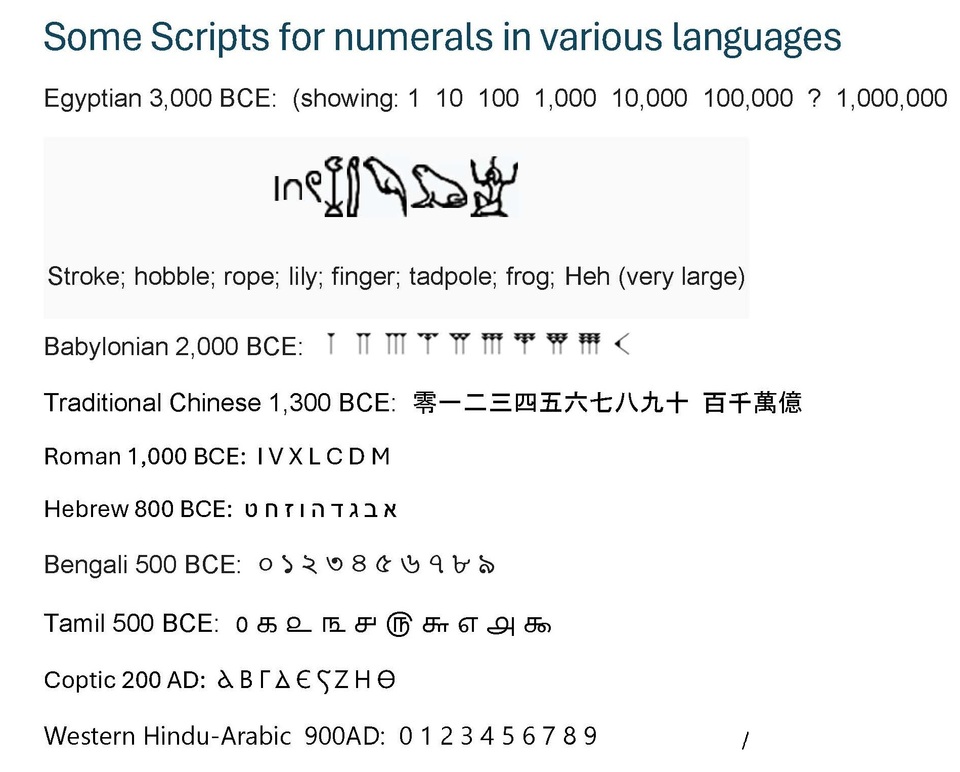
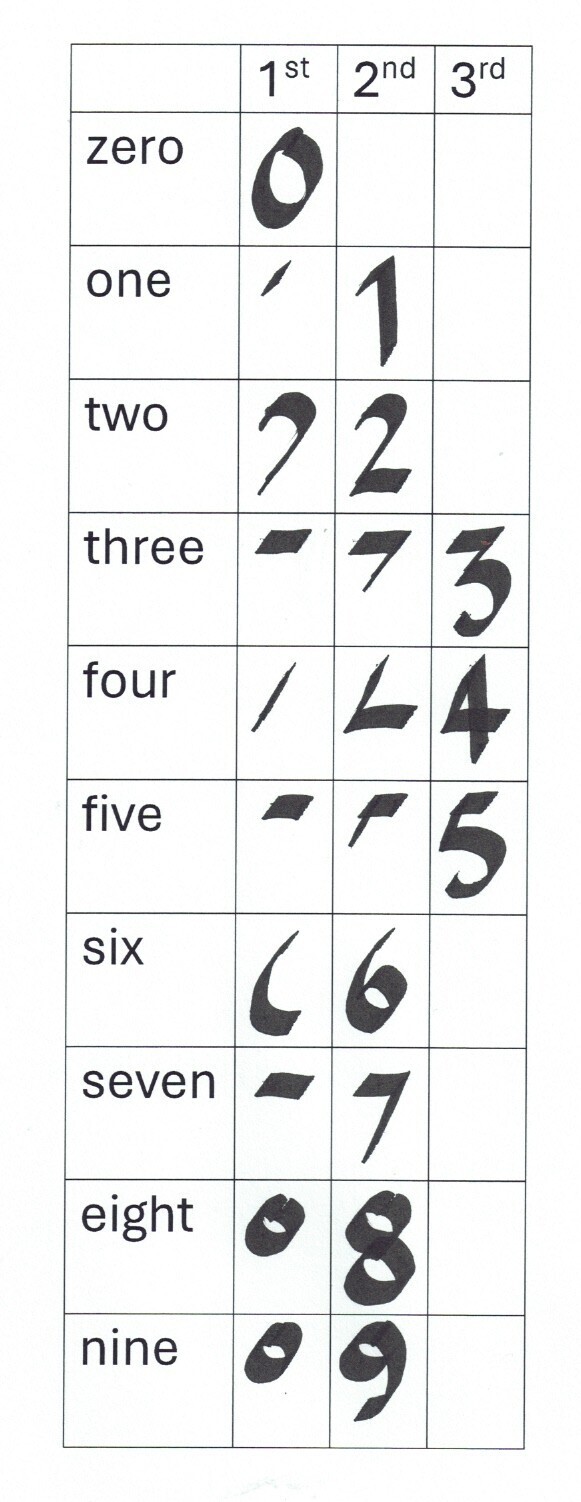
A criterion for symbols is that they must be easy and quick to write, with as few strokes as possible - this table shows that is true for our modern symbols:
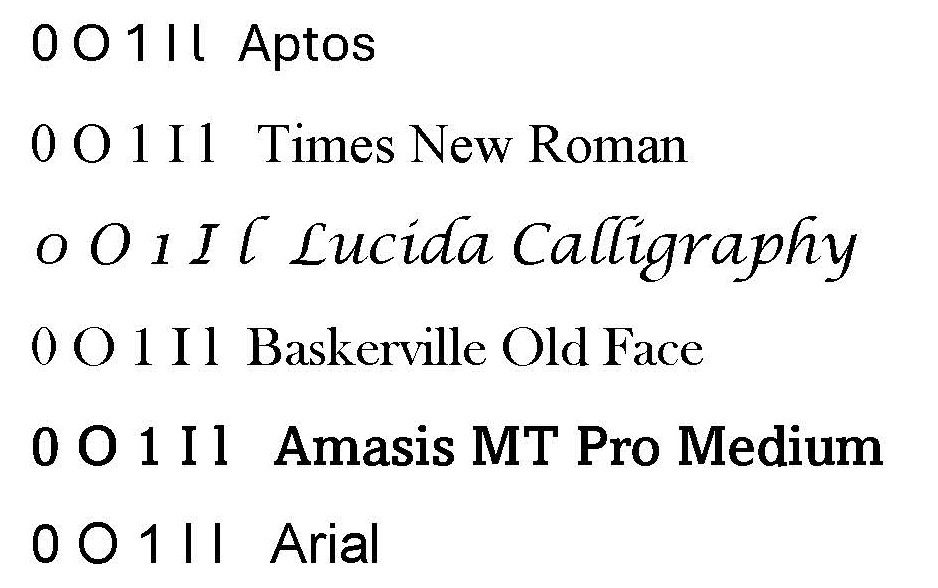
On the other hand, they are best being quite distinct from each other, and not easily confused with one another or letters of the alphabet. So, strangely 6 and 9 are very similar - one being a rotation of the other (For people with dyslexia, that can be a problem.). As well as that, when we compare scripts for the numerals with those for the alphabet, we get a close similarity between the vowel, O, and the numeral for zero, 0; and between the vowel, I, and the numeral for one, 1, and the lower case l (L). These five symbols as seen in 6 computer fonts
There is a polarity between the circular O and the straight I, which is used in the On/Off symbol Φ
where O = Off and I = On. The binary counting system - the basis of computer programming - simply uses just one, I and zero, 0.
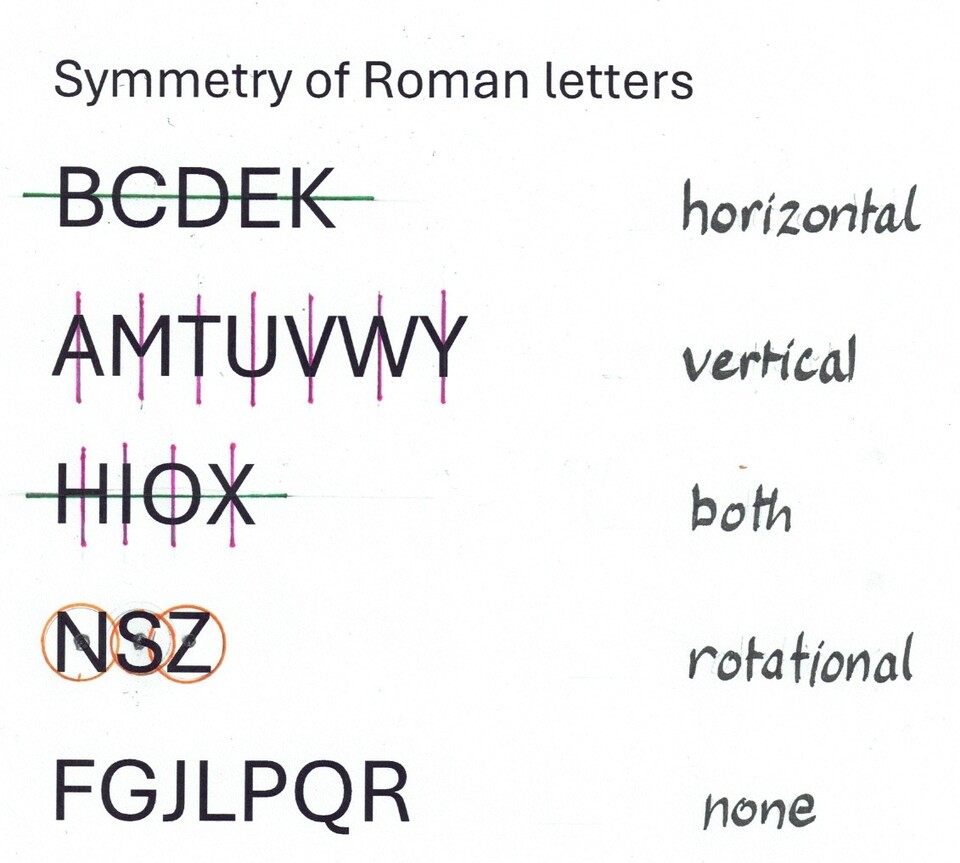
Somewhat related is the high degree of symmetry of the Roman capital letters (uncial [written in the same-sized box] majascules).
Some more next week.
Robin
Posted: 16 Apr 2026