

Anthroposophy in Hawkes Bay
Rudolf Steiner Centre, 401 Whitehead Road, Hastings
Events in brief
over next 2 weeks: 26 April to 10 May 2026
- Tuesday 28 April. 9:15 am. Sue Simpson's Eurythmy Term 2 begins.
- Saturday 2 May. 9:30 am. School of Spiritual Science, Lesson 4.
- Friday 8 May. 7 pm. Friday Conversation Group. Focus: "Karmic Relationships" Vol viii, Lect 6, p74.
~~~~~~~~~~~~~~~~~~~~~~~~~~~~~~~~~~~~~~~~~~~~
Later in the year:
- Monday 11 to Friday 15 May. A Story Workshop
- Saturday 16 May 3:30 pm. Matthew Frear's Presentation**
- Friday 22 to Sunday 24 May. Meditation Seminars poster with Norbert Mulholland**
- Sunday 31 May. Evening to Commemorate the Dead.
- Friday 12 June. Talk by Dr. Richard Drexel on "Sleep" at Taruna College.
- Saturday 13 June. ASNZ AGM and Society Day in Hawke's Bay
- Sunday 28 June, Midwinter Festival.
- Saturday 25 July. Anthroposophy Hawke's Bay AGM.
~~~~~~~~~~~~~~~~~~~~~~~~~
EURYTHMY
Take this opportunity to explore & experience eurythmy. Taikura is in a unique position that all children can do eurythmy. For many people the effect and benefit of eurythmy is best understood through doing it.
So come along and join us, all are welcome!
9 sessions over 9 weeks
Tuesday 28th April - 23rd June
9:15 – 10:15 am
401 Whitehead Rd
Cost $125
Contact sue.simpson0@gmail.com
~~~~~~~~~~~~~~~~~~~~~~~~~
For Study Course on Refined Breathing, refer to NL 16
~~~~~~~~~~~~~~~~~~~~~~~~~
Musings on Arithmetic 5
Click on link for last week's musings as PowerPoint presentation: ARITHMETIC_4_Writing_Numbers.pdf
This week's theme: Addition & Subtraction
- Combination & Separation
- Expansion & Contraction
- Inhalation & Exhalation
The mental activity involved in Arithmetic can be considered a 'spiritual activity' and is thus a very important part of anyone's education.
Arithmetic Operations [Will]
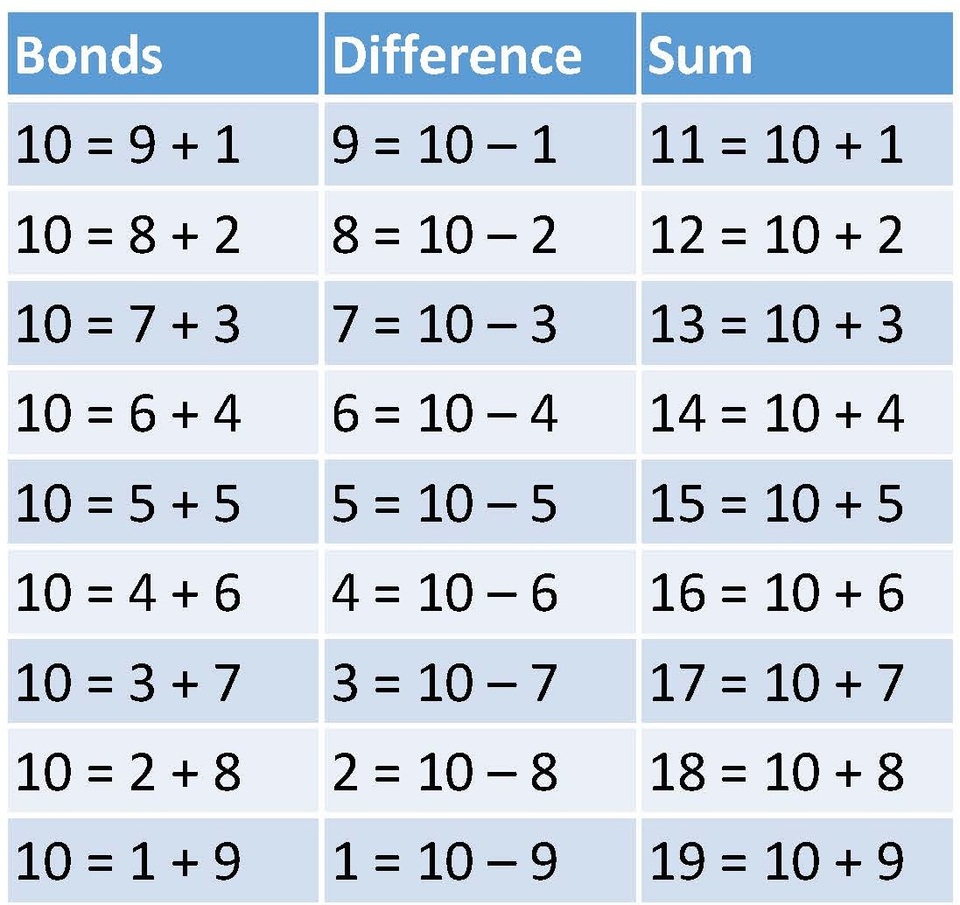
Number Bonds
The base of our number system is ten, 10. It is called the Decimal System. Decimal means based on ten.
So, it is useful to know these relationships "by heart":
An Equation is a Story
- An initial situation, a position on a ‘number line’;
- The adventure is an arithmetical operation (action);
- The result is the homecoming.
Helen left a plum tree with 20 plums;
On the way home she met James and gave him 7 plums for his family;
When Helen arrived home she had 13 plums.
When reduced to numbers the essence of this story becomes:
20 - 7 = 13
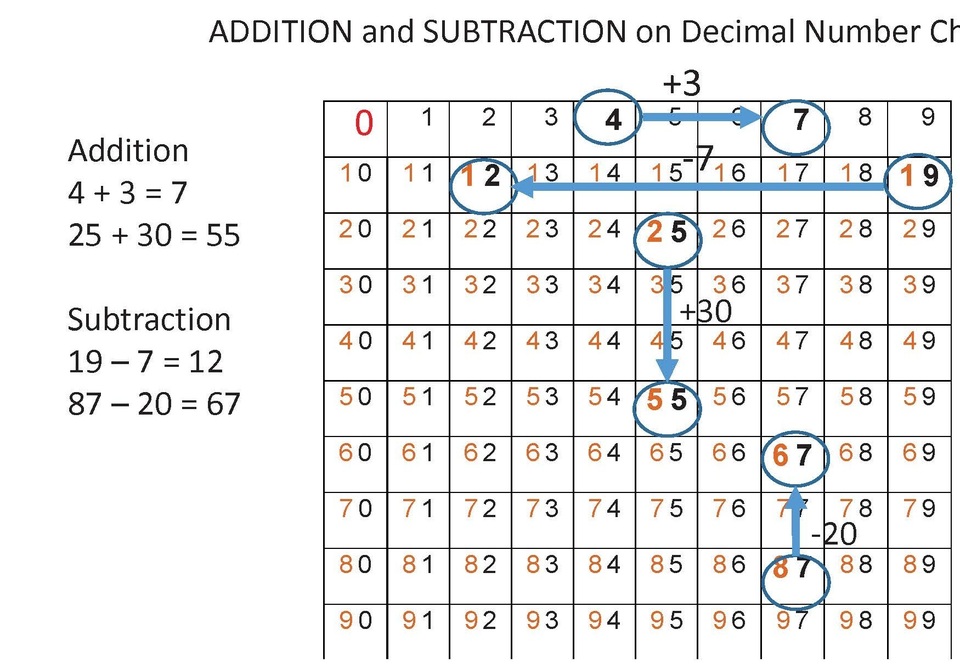
A decimal number chart - - rather than a number line
and continue DOWN the page to the BOTTOM.
that write vertically, or from right to left)

We could continue with a second chart behind this one (3rd dimension) with the nombers 100 to 199; then another with the numbers 200 to 299; and so on...
Addition & Subtraction operations shown on the Chart
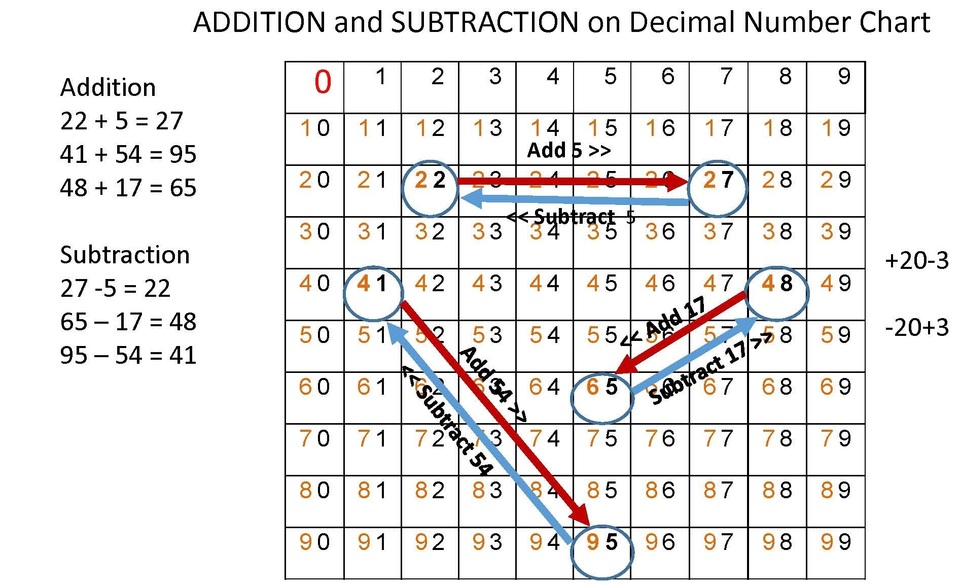
Some more next week.
Robin
Posted: 23 Apr 2026